
Cadence is adding Nvidia’s accelerated computing stack in its agentic AI product solutions. This addresses the autonomous, long-running agents that require accelerated, trusted, physics-grounded engines to translate design intent into automated flows, generate designs and debug errors, and manage long, complex, end-to-end workflows.
“The fusion of agentic AI and physics-based design is transforming how the world’s most advanced chips are engineered,” said Anirudh Devgan, president and CEO of Cadence.
To give agents and engineers the tools they need, Cadence has expanded its design solutions accelerated with NVIDIA Grace CPUs and NVIDIA Blackwell GPUs — and as a turnkey deployment on the Cadence Millennium M2000 Supercomputer — delivering up to 80X greater throughput and up to 20X lower power consumption. This expanded offering now spans analysis, optimization and design, with key solvers deeply optimized with NVIDIA CUDA-X. One example is the Cadence Clarity 3D Solver demonstrating that a Millennium M2000 system configured with 8X NVIDIA RTX pro 6000 GPU servers is up to 5X faster, or 4X better cost iso-performance, compared to an equivalent CPU-based solution, when extracting complex and large-scale designs.
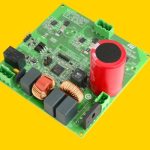
The Cadence Allegro X Design Platform and the Cadence Reality Digital Twin Platform also integrate with NVIDIA Omniverse libraries for photo-realistic visualization, critical for multi-disciplinary engineering and design. Cadence’s MSC Virtual Test Drive (VTD) is being integrated with NVIDIA Cosmos and NVIDIA Omniverse NuRec for advancing the state of the art in physical AI.