
Power solutions provider, Vicor, has partnered with Spacechips, a developer of space-electronics solutions for satellites and spacecraft, to design the most power-dense, reliable transponder for in-orbit AI processing. Spacechips’s AI1 transponder is radiation-tolerant, rugged and compact featuring Vicor’s high density power modules, setting a new standard for power processing, and enabling the next-generation of computing and application design for New Space.
The demand for smaller satellites with sophisticated computational capabilities and reliable and robust onboard processor systems to support the five to 10 year duration of a mission, is pushing the limits of the latest ultra‑deep‑submicron FPGAs and ASICs and their power delivery networks. These high-performance processors have demanding, low-voltage, high-current power requirements and their system design is further compounded by the complexities of managing thermal and radiation conditions in space.
In response, Spacechips has introduced its AI1 transponder, a small, on-board processor card containing an ACAP (Adaptive Compute Acceleration Platform) AI accelerator. The smart, re-configurable receiver and transmitter delivers up to 133 tera operations per second (TOPS) of performance that enables new Earth-observation, in-space servicing, assembly and manufacturing (ISAM), signals intelligence (SIGINT), and intelligence, surveillance and reconnaissance (ISR) and telecommunication applications to support real-time, autonomous computing while ensuring the reliability and longevity to complete longer missions.
“Many spacecraft operators simply don’t have sufficient bandwidth in the RF spectrum to download all of the data they’ve acquired for real-time processing,” said Dr. Rajan Bedi, CEO of Spacechips. “An alternative solution is accomplishing the processing in-orbit and simply downlink the intelligent insights.”
Given the constrained operating environment of space, AI-enabled computing has an acute need for precision power management. The need is compounded by the expanding number, scope and variety of missions that require different kinds of spacecraft and a growing reliance on some form of solar power to deliver adequate power.
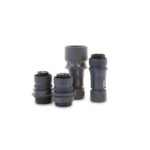
This led Spacechips to partner with Vicor to incorporate Vicor Factorized Power Architecture (FPA) using high density power modules into the Spacechips AI1 Transponder Board.
FPA is a power delivery system design that separates the functions of DC-DC conversion into independent modules. In Vicor’s radiation tolerant modules, the bus converter module (BCM) provides the isolation and step down to 28V, while the pre-regulator module (PRM) provides regulation to a voltage transformation module (VTM) or current multiplier that performs the 28V DC transformation to 0.8V.
The Vicor solution is very small and power dense, enabling better efficiencies and system flexibility .
“Vicor FPA delivers a much more elegant, efficient solution in a very small form factor,” said Bedi.
Today’s low-Earth-orbit observation spacecraft can establish direct line of sight over a specific region only about once every 10 minutes. If satellites were trained to fill those blind spots using AI algorithms, emergency management teams could make faster, better-informed decisions when direct line-of-sight communication with Earth is not possible. Spacechips is harnessing these powerful artificial intelligence compute engines to enable in-orbit AI to address a variety of Earth-bound and space-related problems, such as tracking space debris, monitor spacecraft system health, and identify weather patterns, among others.