Siemens and partners develop reference architecture purpose-built for NVIDIA AI data centres.
The NVIDIA DSX Vera Rubin-aligned reference design translates NVIDIA’s AI factory vision into an electrical, power and controls architecture for hyperscalers, colocation providers and specialised cloud infrastructure providers.
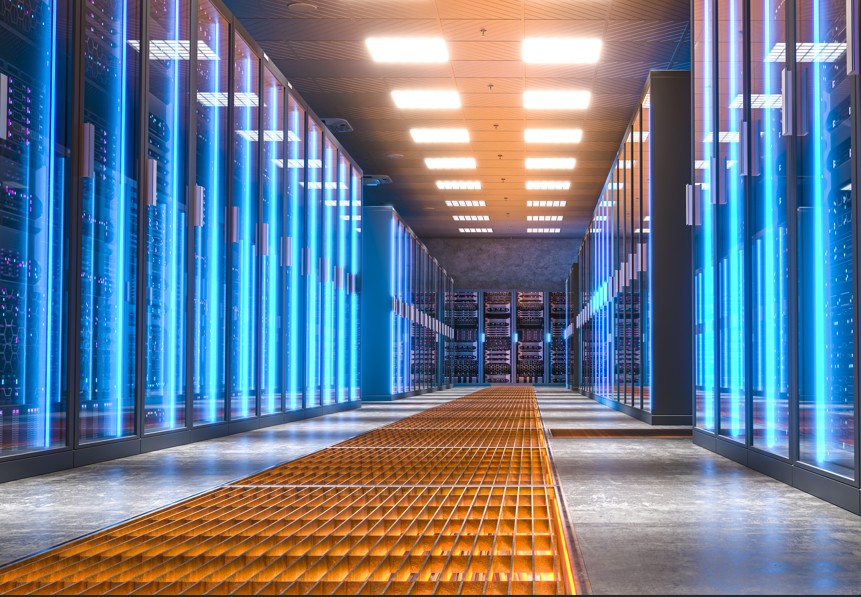
As AI factories become more pronounced in the data centre industry, next-generation platforms such as NVIDIA Vera Rubin NVL72 are redefining infrastructure requirements, pushing technology to new limits, especially in the domains of power and cooling. Owners and operators of AI factories face a new operating reality characterized by site selection, grid interconnection strategy, capital efficiency, and time to revenue, all while balancing a suite of new and emerging technologies.
Sized at a total facility capacity of 136MW with an IT load of 100MW, Siemens’s reference design for NVIDIA DSX Vera Rubin NVL72 delivers an end-to-end electrical, power and controls solution, spanning the complete path from the utility connection (nominal 34.5kV) through medium-voltage distribution, modular low-voltage power blocks, and ultimately to the rack interface. With a baseline architecture targeting Tier III concurrent maintainability, any single component can be removed from service without impacting IT operations. And as it is built on repeatable, scalable electrical building blocks aligned with NVIDIA DSX Vera Rubin deployment units, capacity can be added in phases – supporting initial deployments of tens of megawatts and scaling to hundreds of megawatts or beyond – without fundamental redesign.
The reference design incorporates nVent-aligned electrical design parameters to ensure compatibility with NVIDIA workloads and system architectures, with a planned expansion to include advanced thermal management capabilities in a forthcoming supplement.
“Platforms like NVIDIA Vera Rubin NVL72 are pushing rack densities well beyond what traditional air-cooled infrastructure can support. We help partners like Siemens translate reference architectures into deployable thermal solutions that perform reliably from day one at this scale,” said Sara Zawoyski, President, nVent Systems Protection.
The DSX Vera Rubin reference design allows AI factory owners and operators to deploy extreme-density AI infrastructure faster, with lower risk and greater predictability, while also preserving long-term flexibility for future IT generations and evolving energy requirements. Designed to support DSX MaxLPS, it enables AI factories to maximize computing output and token production within fixed power envelopes. A core objective is to also compress deployment timelines and reduce execution risk.
As part of the partnership, Fluence’s battery energy storage provides the flexibility and resilience AI factories need to operate reliably and scale quickly in power-constrained environments.
“Our Smartstack platform is central to this new architecture, transforming the grid into an accelerator for compute. By providing essential capabilities like voltage and frequency ride through, black start, grid demand response, and AI load smoothing, we are enabling our customers to build the AI factories of the future faster and more reliably,” said Jeff Monday, Fluence Chief Growth Officer.