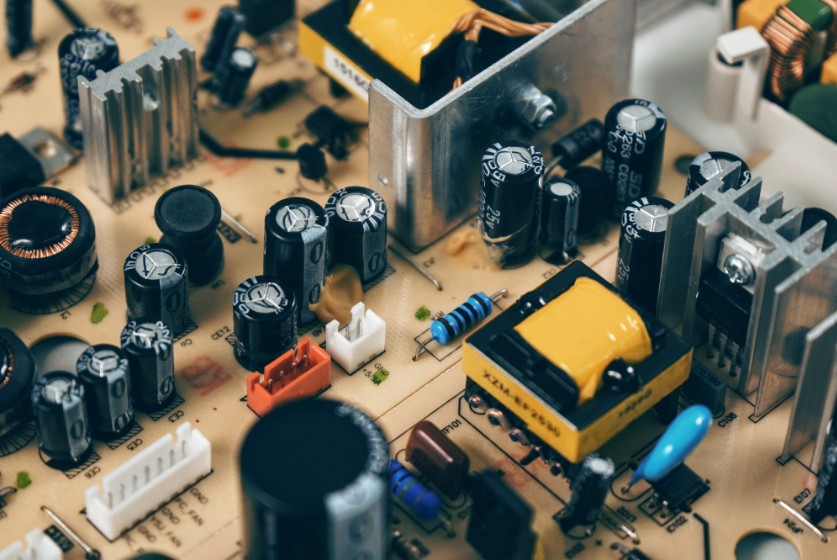
The electronics industry has experienced remarkable transformation over the past several decades. Products that once required large circuit boards and significant physical space have evolved into compact, high-performance devices capable of performing increasingly complex tasks.
From medical equipment and telecommunications infrastructure to aerospace systems and industrial automation, today’s electronic products rely on sophisticated printed circuit boards that must meet demanding performance and reliability requirements.
As technology continues to advance, manufacturers face a unique challenge: adapting to changing industry standards while maintaining the quality and consistency customers depend on.
While many companies have entered the PCB manufacturing industry over the years, only a small number have successfully evolved alongside the rapid pace of technological change. The ability to adapt, invest in new capabilities, and maintain customer trust over multiple decades has become an important differentiator in a highly competitive market.
One company that has continued to evolve with the industry is Avanti Circuits, a PCB manufacturer that has spent decades supporting customers across a wide range of industries and applications.
How PCB manufacturing has changed over the years
The PCB manufacturing process today looks very different from what it did decades ago.
Early circuit boards were often relatively simple, consisting of fewer layers and larger component footprints. Manufacturing tolerances were less demanding, and many electronic systems required significantly more physical space than modern designs.
Today, engineers regularly develop products featuring:
- Multi-layer PCB architectures
- High-density interconnect (HDI) designs
- Controlled impedance requirements
- Miniaturized components
- High-speed signal routing
- Advanced thermal management solutions
These advancements have increased the complexity of PCB manufacturing and created new demands for both equipment and engineering expertise.
Manufacturers that remain competitive must continuously invest in technology, training, and production processes to support these evolving requirements.
Why experience still matters
While modern equipment plays a critical role in PCB fabrication, experience remains one of the industry’s most valuable assets.
Over time, manufacturers encounter thousands of unique design challenges, material considerations, and production scenarios. This accumulated knowledge often helps identify potential manufacturing concerns before they become costly production problems.
For customers, this can lead to:
- Faster project execution
- Improved manufacturability
- Reduced production risks
- Better overall product reliability
As products become more advanced, many organizations continue to place significant value on working with manufacturing partners that combine modern capabilities with decades of practical experience.
Manufacturing is about more than machines
When people think about PCB manufacturing, they often focus on fabrication equipment.
While advanced machinery is essential, successful PCB production involves much more than automated systems.
Engineering review processes, material selection, stack-up planning, testing procedures, quality control systems, and production expertise all contribute to the final product.
Even the most advanced manufacturing equipment requires knowledgeable teams capable of understanding design intent, identifying potential issues, and maintaining strict quality standards throughout production.
This combination of technology and expertise is often what separates exceptional manufacturers from average ones.
Supporting industries where reliability matters
One of the most interesting aspects of PCB manufacturing is the variety of industries that depend on reliable circuit boards.
A single PCB manufacturer may support projects for:
- Aerospace applications
- Medical devices
- Telecommunications systems
- Industrial automation equipment
- Military and defense technologies
- Commercial electronics
Each industry brings its own requirements, standards, and challenges.
For example, medical devices often require exceptional reliability and consistency, while aerospace systems may need to perform under extreme environmental conditions. Industrial applications frequently demand long operating lifecycles and resistance to vibration, heat, and other harsh conditions.
Successfully supporting these diverse industries requires flexibility, technical expertise, and a commitment to quality.
The importance of long-term relationships
Another factor that often distinguishes established manufacturers is their ability to build long-term relationships with customers.
Many organizations view PCB manufacturing as more than a transactional service. Instead, they seek manufacturing partners that understand their products, support their development efforts, and contribute to long-term success.
As products evolve and technologies change, maintaining continuity with a trusted manufacturing partner can provide significant advantages.
Manufacturers that prioritize communication, responsiveness, and engineering support often become valuable extensions of their customers’ development teams.
Looking toward the future
The future of electronics manufacturing continues to look promising.
Emerging technologies such as artificial intelligence, advanced robotics, electric vehicles, next-generation communications systems, and innovative medical devices are expected to drive continued demand for sophisticated printed circuit boards.
At the same time, customer expectations regarding quality, reliability, and turnaround times continue to increase.
Manufacturers that successfully adapt to these changing demands will likely play an important role in supporting future innovation across countless industries.
For organizations evaluating manufacturing partners, factors such as experience, technical capabilities, quality control processes, and long-term stability remain critical considerations.
In an industry defined by constant change, the companies that continue investing in people, technology, and customer relationships are often the ones best positioned for long-term success.
As PCB technology continues to evolve, manufacturers with proven experience and a track record of adaptation will remain valuable partners for engineers, designers, and innovators working to bring the next generation of electronic products to life.