NGK Insulators of Japan is joining the New Energy and Industrial Technology Development Organization (NEDO) R&D project for developing ‘Enhanced Infrastructures for Post-5G Information and Communication Systems’. This is thanks to its advances in thin film lithium niobate (TFLN) optical technology, used for the industrialisation of optical quantum computers.
NGK has been developing bonded TFLN wafer technology over many years, now to be harnessed for the development of photonic ICs for optical quantum computers. The company hopes to accelerate the practical application of optical quantum computers through this NEDO project, and contribute to building the information processing infrastructure that will support next-generation AI.
Advances in generative AI have increased electricity consumption at data centres around the world, and the resulting environmental burden and higher energy costs have emerged as social issues. The high-speed computing capabilities of quantum computers are attracting attention as a potential solution.
Conventional quantum computers operate at extremely low temperatures, requiring massive cooling equipment and tremendous energy costs. In contrast, optical quantum computers can operate at room temperature, eliminating the need for cooling equipment and enabling a substantial reduction in installation space and greater energy efficiency. Moreover, because they are highly compatible with existing optical fibre, optical quantum computers are seen as a promising next-generation technology.
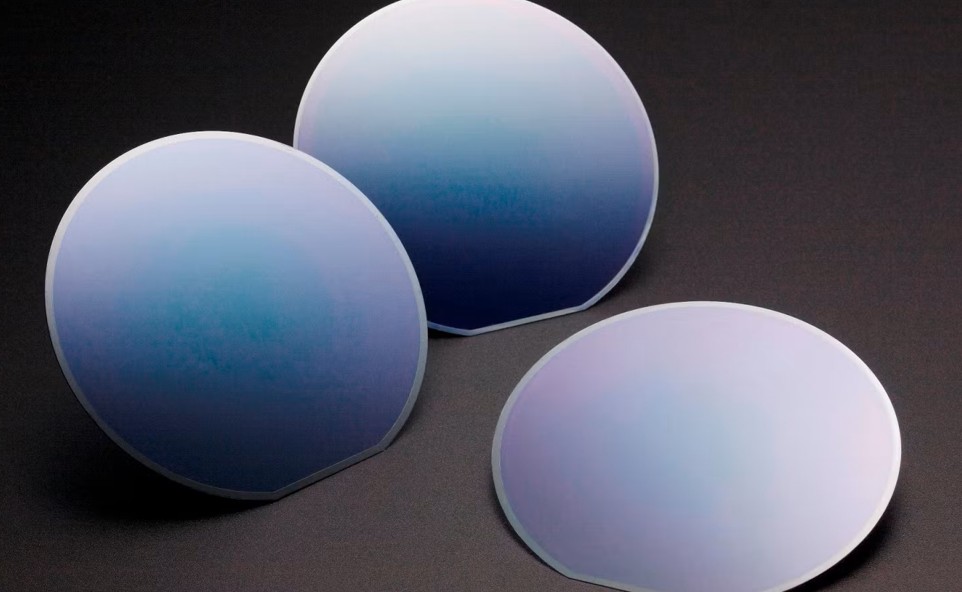
With its direct bonding technology cultivated through the development of bonded wafers for surface acoustic wave (SAW) filters, NGK can join different materials with high precision at room temperature without using adhesives, thereby ensuring the material properties of TFLN and high reliability. Furthermore, by applying its ultra precision polishing technology, which enables the functional layer to be fabricated as a uniform thin film at the nanometre level, NGK will contribute to the thinning of wafers. Based on these technologies, NGK will develop eight-inch TFLN wafers, which will pave the way for reducing mass production costs.
The project will run to year 2027.