NVIDIA GTC (GPU Technology Conference) is NVIDIA’s flagship global AI and developer conference, launched in 2009. It brings together developers, researchers, engineers, and business leaders to showcase breakthroughs in artificial intelligence, accelerated computing, robotics and data science. This year it was held in Berlin, Germany, and many companies brought their novelties to the fore.
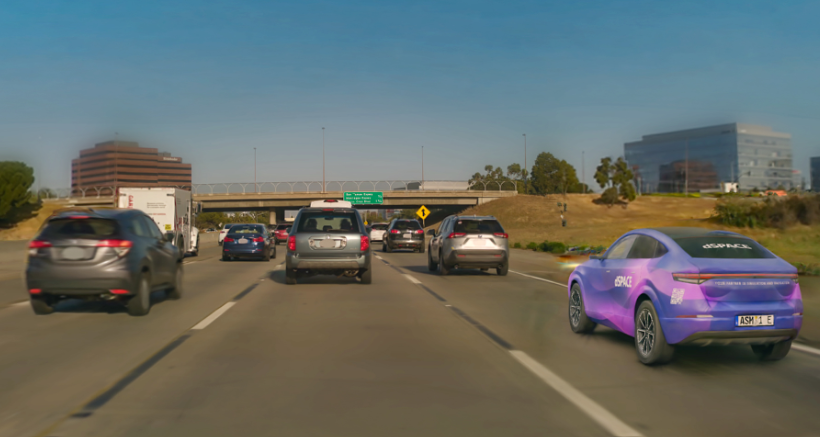
Simulation and validation solutions provider, dSPACE, demonstrated how recorded real-world sensor data can be converted into highly realistic simulation scenarios for the development and validation of advanced driver-assistance systems (ADAS) and automated driving functions. The demonstrations showed how dSPACE integrates its simulation tool chain with the NVIDIA Halos SAFE safety evaluation framework to expand test coverage and accelerate AV validation, using NVIDIA Omniverse NuRec within the dSPACE Automotive Simulation Models (ASM) tool suite to combine neural reconstruction with established models for vehicle dynamics and traffic simulation.
The SIL and HIL workflows in NVIDIA Halos SAFE also support the automated execution of Euro NCAP tests, with the goal of advancing the virtual homologation and validation of ADAS systems. The same technology can also be applied to higher levels of automation, including robotaxis.
AI and digital twin company, Cadence, made a series of announcement at the event, including:
- First Sovereign AI Platform for Semiconductor, System and AI Factory Design: Cadence announced the availability of a sovereign AI data centre in Munich that brings together Cadence OnCloud, NVIDIA Grace and Vera CPU systems, and the Cadence Millennium M2000 AI Supercomputer powered by the NVIDIA Blackwell platform. As the first EDA vendor to deliver a comprehensive sovereign AI platform for semiconductor, system and AI factory design in Europe, Cadence enables customers to design chips, advanced packaging, systems, physical AI applications and AI infrastructure while maintaining data residency within regional jurisdiction.
- Cadence Brings AI Super Agents to Nokia: Nokia is deploying the Cadence AuraStack AI Super Agent on the Cadence Millennium M2000 AI Supercomputer to advance electronic system design at scale. By unifying agentic AI, Cadence engineering software and accelerated computing in a secure, on-premises platform, Nokia is accelerating key design and analysis workflows by 5X while maintaining control of sensitive engineering data and intellectual property.
- Cadence and Toyota Advance High-Fidelity Automotive Simulation: Cadence is collaborating with Toyota Motor Europe (TME) to evaluate high-fidelity external aerodynamics and aeroacoustic simulation on the TME Aygo X model using NVIDIA Blackwell GPU technology.
Cadence is keen on partner collaborations, working with industry leaders across the AI ecosystem to accelerate the deployment of sovereign AI infrastructure throughout Europe.
“Chip designs and AI infrastructure are strategic assets for European industry, and sovereignty means being able to develop both while protecting the data behind them,” said Tim Costa, vice president and general manager of industrial and computational Engineering at NVIDIA. “With Cadence, we’re bringing NVIDIA accelerated computing into European cloud-based design workflows and Omniverse libraries into AI factory simulation. Companies can design the silicon and validate the infrastructure to run it—from power delivery to cooling—within a European environment built to protect their design data.”