LIGENTEC and X-FAB have extended their collaboration over integrated photonics for the communication, computing, quantum and sensing markets.
As part of this expansion, the partners will jointly bring X-FAB’s XPH90 Silicon Photonics (SOI) technology to market through its integration into LIGENTEC’s broader photonics platform portfolio, creating a unified ecosystem spanning both SOI and established low‑loss Silicon Nitride (SiN) technologies. LIGENTEC will serve as the primary customer interface, providing a streamlined and coherent entry point to both high-bandwidth SOI solutions and its established low-loss Silicon Nitride (SiN) platform.
A central pillar of the collaboration is the industrialization of heterogeneous integration technologies across both the SiN and SOI platforms, addressing the integration of key active and passive building blocks, including lasers, optical amplifiers, high-speed modulators, and photodetectors. A particular focus will be placed on thin-film lithium niobate (TFLN) technologies, enabling advanced electro-optic capabilities for high-performance, next-generation communication and signal-processing systems.
“By fostering this heterogeneous integration, particularly with thin-film lithium niobate, we are providing the essential building blocks for quantum computing and the next generation of telecommunications and data communications systems. This collaboration reinforces our commitment to developing a robust, industrial-scale high volume European photonics supply chain,” said Rudi De Winter, X-FAB’s CEO.
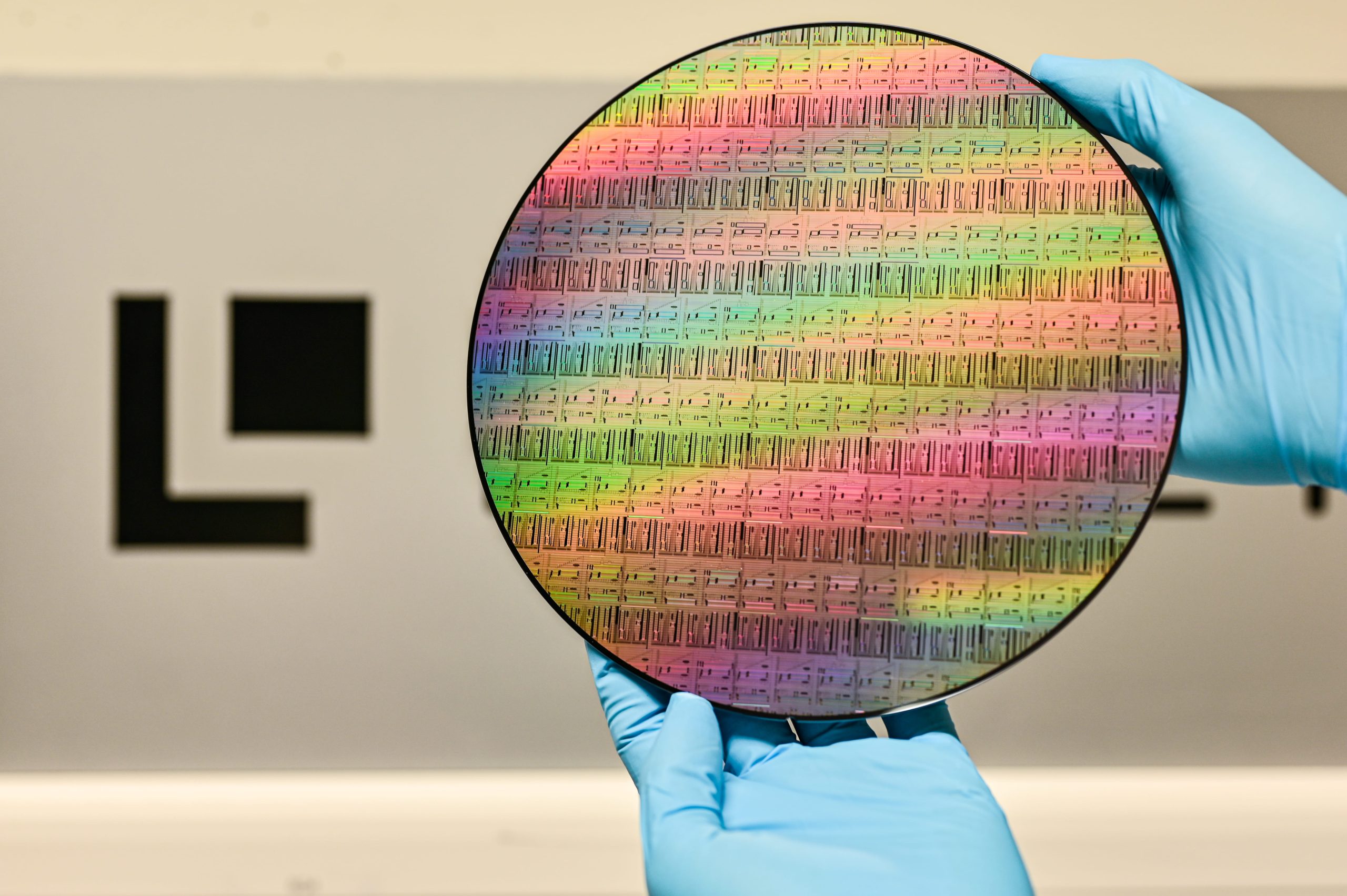
To support this vision, the partners will invest in scaling high-speed TFLN-on-SiN and TFLN-on-SOI within the X-FAB foundry ecosystem on 200 mm wafer technologies. This step supports a clear path from advanced R&D to industrial-scale production and strengthens Europe’s position in next-generation photonic integration.
Through this unified go-to-market approach, customers benefit from a broader and more coherent technology portfolio, early engagement at the system and application level, and a reliable transition from prototyping to volume manufacturing. The collaboration further reinforces the partners’ ambition to build a robust, industrial-scale supply chain for integrated photonic technologies.