

Since transistors are semiconductor devices, their performance varies with ambient temperature, which enables the design of temperature switches with simple transistor circuits. The higher the temperature of the transformer, the more current passes between the emitter and collector pins of the transistor.
Figure 1 shows a simple temperature switch circuit designed to provide a 9Vdc output voltage when the temperature of the Q1 transistor exceeds 116.7oC. The operation of this circuit depends on the transistor’s parameter changes with ambient temperature; see Figure 2 for output voltage vs. Q1 temperature. The circuit output voltage drops from 9Vdc to almost 260mVdc when the temperature exceeds 116.7oC.
The question to consider is: What happens if the voltage source drops below the nominal 9Vdc? This is a legitimate scenario, since most temperature switch circuits are battery-operated. Will this drop in voltage supply impact the performance of such a switch, perhaps make the circuit useless and not detect any high temperature? What is the magnitude of the impact?
These and more will be answered with the following experiment.
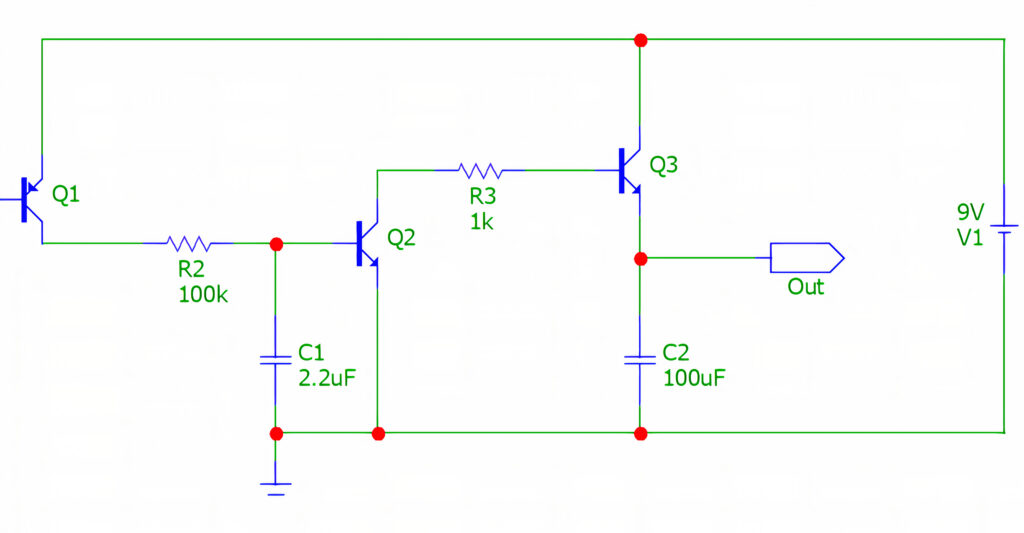
Figure-1: A popular transistor temperature switch circuit

Figure-2: The circuit output voltage vs. ambient temperature of the Q1 transistor
Experiment setup
The method used in this experiment centres around changing the power supply voltage level, starting from 9Vdc to 5Vdc, and measuring the circuit’s response.
Since the circuit is designed to flag temperatures of 116.8oC, its response is closely monitored for temperatures between 100 and 130oC. The plotted curves are then compared to determine the effects; see Figure 3.
By superimposing all the circuit’s output voltages at various power supply voltage levels, we notice that:
- The circuit’s output voltage drops when the power supply voltage drops. However, the circuit detection of high temperatures is still reliable, and the circuit performs reasonably. The impact is acceptable if the load connected to the circuit output can operate at a lower voltage. In such a case, the circuit can still detect the high temperature.
- The trigger temperature changes at various power supply voltage levels. As shown in Figure 3, the circuit drops its output voltage at 116.7oC, when the supply voltage is 9Vdc. In comparison, the output voltage drops at 117.2oC, when the supply voltage is 8Vdc. This means that the circuit becomes slightly less sensitive to temperature with a drop in supply voltage.
The same observation is made with further drops in supply voltage. Figure 4 shows the relationship between the supply voltage and the trigger temperature.
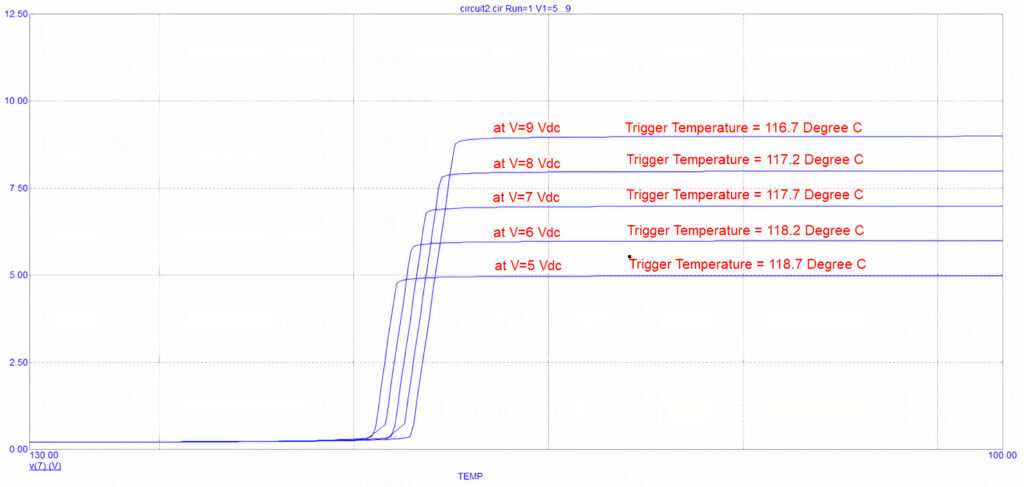
Figure 3: The temperature switch circuit response to different power supply voltage levels
Figure 4: The relationship between the trigger temperature and the power supply voltage level
We can therefore conclude that despite the simplicity of the transistor temperature switch, the circuit shows reasonable stability against drops in power supply voltage. As the power supply voltage drops from 9Vdc to 5Vdc, the circuit can still trigger output voltage at high-temperature points.
The experiment also shows that the circuit’s trigger temperature shifts slightly when the supply voltage drops below 9Vdc. The shift is noticed at a rate of 0.5oC for every 1Vdc drop in power supply voltage.
The circuit is ideal for battery operation since there the power supply voltage level is expected to drop below the design’s nominal voltage. The trigger temperature is small, and the circuit can be considered reasonably stable.