
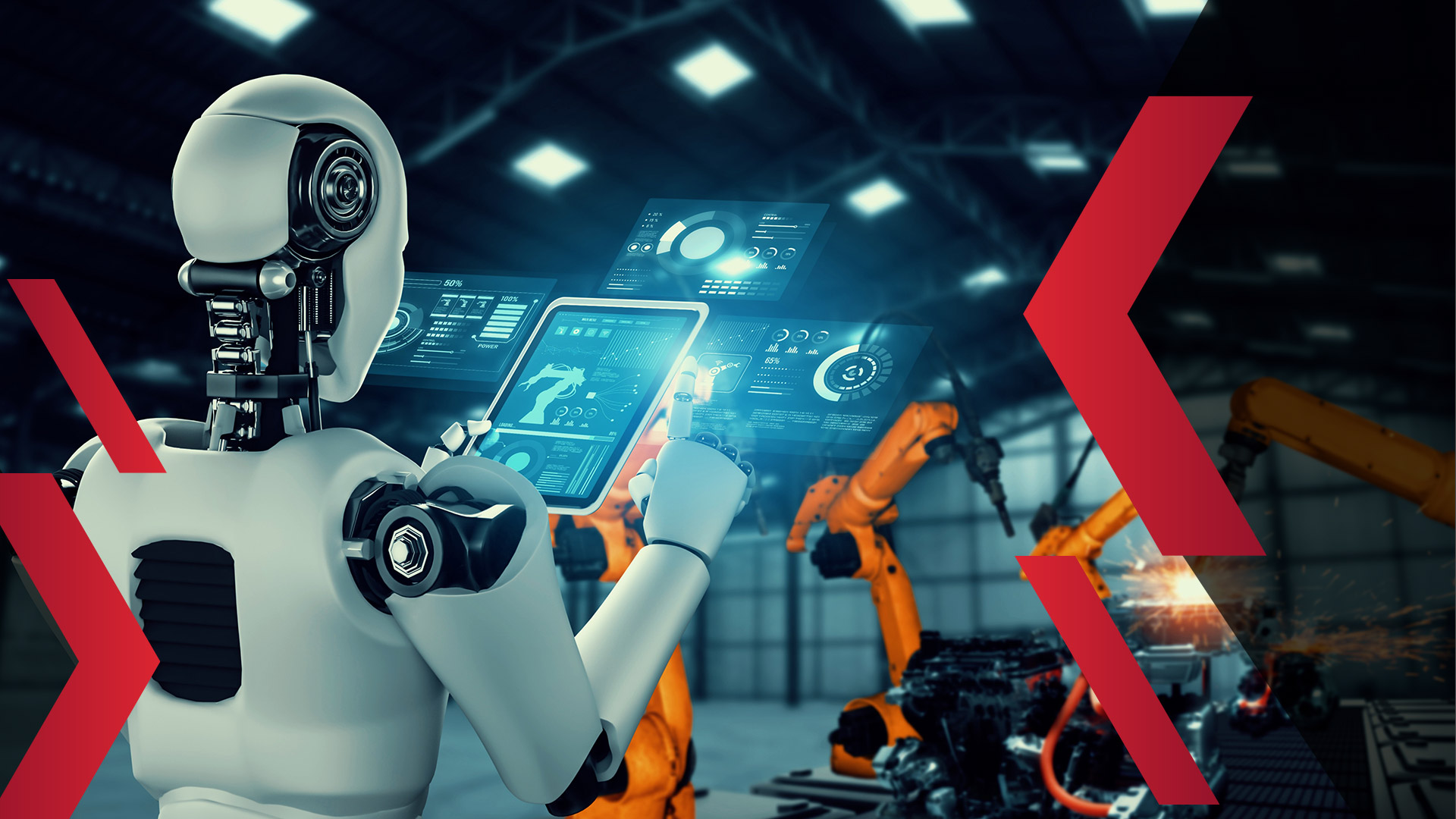
The PCB manufacturing process is becoming more sophisticated and intricate with the modern innovations in the electronics industry. PCB experts have leveraged their knowledge to increase the production yield and also to optimize the manufacturing process. Yet, the enormous process involved in the PCB fabrication and assembly stages can become overwhelming for humans and often results in fatigue and faults. The introduction of AI and Robotics has enabled the autonomous automation of the PCB manufacturing industry resulting in improved reliability and accuracy.
The manufacturing process is growing complex with shrinking board sizes, tiny and fragile components, multilayer stack up, and high component density. Also, there is an increased chance of failures, wastages, and other assembly issues which can significantly delay the PCB production timelines. PCB manufacturers have to adopt advanced production techniques to stay ahead of the competition. Automation of the entire PCB assembly process will improve the production output and also reduces the overall manufacturing cost.
Impact of AI and Robotics in PCB manufacturing:
Automated Robots can be deployed in all the stages of the PCB production cycle like material handling, component creation, pick and place, inspection, testing, packing, etc. In short, AI and Robotics together can almost provide you with Turnkey PCB Assembly solution. This will considerably reduce the labor cost, wastages, and assembly faults. AI-based Robots are inherently precise and faster in operation which enables PCB manufacturers to optimize the entire production supply chain.
Modern circuits are more complicated with the introduction of surface mount technology. Finding faults among thousands of solder joints is not feasible using manual inspection methods. But machine vision systems are better equipped with deep learning to understand the distance and depth of the objects. This has resulted in obtaining accurate images for PCB testing using the Automated Optical Inspection (AOI) method which helps in detecting faults during the early stages of the production process.
AI-based robots can quickly learn and collect data during assembly operations. The enormous data collected is stored in the cloud which can be further used by other AI-based robots to self-learn. This saves a lot of time in training the robots and also ensures consistent quality. The flexibility and lightweight nature of the robots make it easier to deploy them in various applications without much change in the layout of the production line. This saves both space and setup time during PCB assembly.
Merits of using Robotics and AI in PCB Production:
• Quicker Material Management
Material supervision is efficient when the stocks are traceable and quickly available. Industrial Robots can speed up the process of uploading and downloading the PCB components and materials. While shifting the components, automated guided vehicles can reduce possible errors due to ambiguity. The overall productivity and usage of assembly equipment increase by swift material handling by the automated robots. Also, using robots during material movement can minimize the possible Electrostatic Discharge (ESD) damage to the components.
• Improved Product Quality
Robots and automated machines use AI-based sensors to perform different PCB assembly tasks with great accuracy. The sensors can easily adapt to the varying environmental condition and correct any error in the initial stages itself. The programmable vision systems can maximize the assembly line efficiency and overall product quality.
• Increased Shop Floor Flexibility
AI Robots depend on high-precision cameras during pick and placement to confirm the physical features of the components. The lightweight and adaptability of the robotic arms, along with the precise vision equipment support adequate pressure application on the components. This increased flexibility ensures that no layout change is required for different assembly applications and reduces setup time.
• Consistent Inspection Support
The deployment of industrial robots can be the best solution to achieve reliable inspection support during the PCB assembly. Unlike manual inspection, Robots can perform repetitive tasks without any error or break. Automated Optical Inspection (AOI) and Automated X-ray Inspection (AXI) are the commonly used automated inspection methods. Robots with arm-mounted cameras ensure the correct component orientation and soldering.
• Safe Test Environment
Automatic test support like robotic flying probes can approve the circuit functionality by verifying the connections. Robotic arms attached with IR cameras can assess powered PCBs for any hotspots and other thermal issues. Robotic testing can access constricted test points and reduce the hazards of electrical shock or burns which can be detrimental in manual testing.
• Higher Sustainability
Robots are used to desolder electronic components from discarded PCBs for recycling purposes. Image recognition software assists the robots to locate the components to be retrieved from the scrap boards. Upcycled components can support the PCB manufacturing industry to be more environment-friendly.
AI-based Robotics can reduce process bottlenecks and greatly optimize the PCB production process. They are flexible and can handle complex tasks with precision. Robotics with AI are revolutionising the PCB manufacturing industry by handling a wide range of tasks swiftly and more competently.
The introduction of AI in the automation process can assist PCB manufacturers in producing highly complicated circuit boards, compliant with industry standards. Robots are now affordable and can be used by contract manufacturers to build smart factories for more output and less wastage.
Industry 4.0 in PCB Manufacturing:
Industry 4.0 refers to the digitization of the manufacturing industry with the application of robotics, AI, IoT, and data aggregation. This will drive the production of electronic products with improved performance and reduced costs. In PCB manufacturing, it provides the ability to track PCB defects using the collected data and also brings increased process visibility. Following are some of the advantages of incorporating Industry 4.0 standards in PCB manufacturing:
Enhanced performance
Better quality control
Seamless supply chain management
Effective product maintenance
Reduced scrap rate
It is necessary to choose the right CM while building PCBs as per Industry 4.0 standards. Adhering to an effective PCB development process, procuring reliable components from approved vendors, following necessary guidelines all through the development process, and ensuring that the CM employs the best quality control measures are the necessary steps to manufacture Industry 4.0 compliant PCBs. Robotics and AI together optimize the operations and accumulate huge data from every sensor and machine used in the PCB manufacturing process. The analyzed data can help in decision-making and error corrections leading to a high-yield PCB production. Though complete automation involves many technical challenges, CMs have started incorporating discrete systems at key production points to earn the benefits of AI-enabled Robots in PCB workshops.
By Ken Ghadia, Sales Engineer, Technotronix