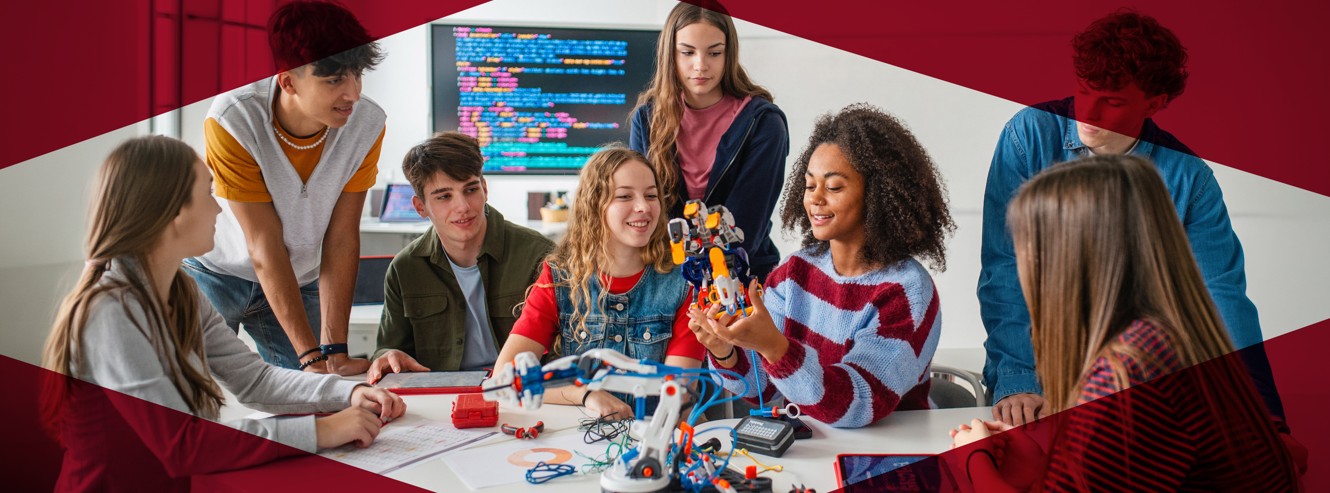
Science, Technology, Engineering and Mathematics (STEM) education is fundamental to preparing the next generation for an increasingly digital and technology-driven world. From foundational coding skills to advanced artificial intelligence (AI) applications, STEM programmes develop analytical thinking, creativity, collaboration and real-world problem-solving capabilities.
Insights from RS highlight the rapid evolution of educational technology. Key themes include AI-driven learning, robotics integration, immersive hands-on experiences and tools that bridge theory with practical application. These trends signal a clear shift towards experiential learning — enabling students not only to understand concepts, but to apply them through structured, project-based activity.
At RS, supporting STEM education goes beyond product supply. It is about enabling educators and institutions with reliable, scalable solutions that transform curiosity into capability.
As Simon Meadmore, Category Director – Semis, Passives & SBC at RS, explains: “At RS we believe that providing inspiring, practical tools and resources is essential to unlocking the potential of engineers of tomorrow. Whether it’s supporting educators with intuitive hardware or helping students move from curiosity to real-world creation, our aim is to partner with schools and institutions to make STEM learning accessible, relevant and exciting.”
Building strong foundations
A successful STEM journey begins with accessible and engaging tools. The BBC micro:bit has become a cornerstone of classroom computing, providing an intuitive platform for introducing coding and electronics. With integrated sensors, LED displays and programmable inputs, it enables learners to design interactive projects while developing programming skills in environments such as MakeCode and Python.
Its flexibility supports cross-curricular applications — from data logging in science to algorithmic problem-solving in mathematics — making it suitable for both structured lessons and enrichment programmes.
Extending this functionality, the Kitronik Arcade for the micro:bit transforms the micro:bit into a programmable handheld console. By designing and coding their own games, students reinforce computational logic, sequencing and debugging skills in an engaging format. This approach reflects the growing emphasis on interactive, student-led learning highlighted at BETT 2024.
Robotics and AI in practice
Robotics plays an increasingly prominent role in modern STEM curricula, offering tangible applications of coding and systems thinking.
The Ohbot AI Robot provides an accessible introduction to robotics and AI concepts. This programmable robot enables students to control movement, speech and expression, supporting structured lessons in programming logic, automation and human–machine interaction. Its versatility allows integration across computing, design technology and creative subjects, encouraging interdisciplinary learning.
For more advanced exploration, the Duckietown Invention Kit for Nvidia introduces autonomous systems and machine learning. Students build and programme small-scale self-driving vehicles powered by Nvidia hardware, gaining insight into computer vision, sensor integration and real-time decision-making. Such platforms reflect the increasing importance of AI literacy within education and align with industry-level innovation.
Experiential engineering
Hands-on engineering experiences are essential to building confidence and technical understanding. The MakeKit Drone for the micro:bit enables students to assemble and programme their own drone systems using micro:bit technology. Through this process, they explore aerodynamics, embedded systems and control algorithms while developing structured project management and teamwork skills.
These practical applications exemplify the broader shift towards problem-based, experiential learning. By engaging directly with physical systems, learners gain a deeper appreciation of iterative design, testing and optimisation — core principles of engineering practice.
A comprehensive approach
Effective STEM delivery requires more than hardware alone. Through RS, educators can access technical resources, project guidance and a global innovation community. This ecosystem approach supports scalable implementation across primary, secondary and further education settings.
Importantly, the breadth of the RS range enables structured progression — from foundational coding with micro:bit to robotics with Ohbot and advanced AI systems using Duckietown. This continuity supports sustained engagement and long-term skills development.
As digital transformation accelerates across industries, demand for STEM capability will continue to grow. By aligning with emerging EdTech trends and providing dependable, innovative solutions, RS is committed to supporting educators and inspiring learners — helping to develop the engineers, technologists and problem-solvers of tomorrow.
By RS technical team