
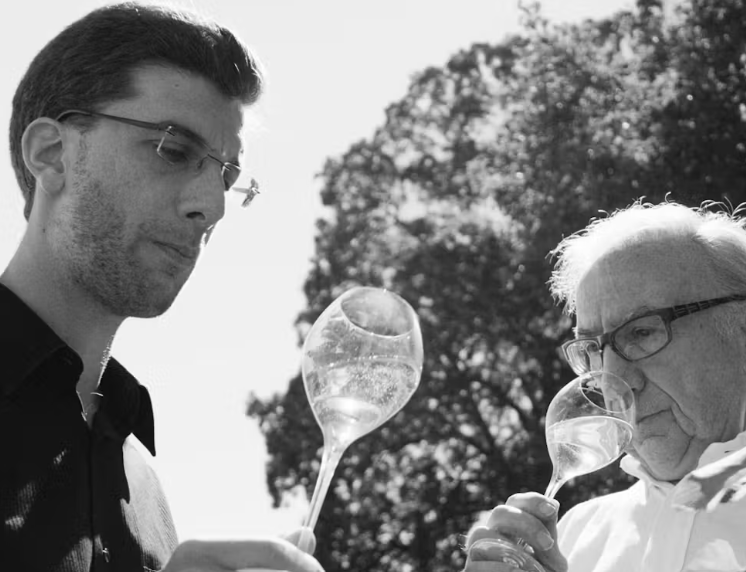
Moët Hennessy, Analog Devices (ADI) and UC Davis have joined forces to advance wine production through breakthrough chemical signature detection technology based on AI.
Researchers have demonstrated the ability to identify the complex chemical signatures emitted from grapes and wine to predict quality risks in wine production faster and more affordably than conventional methods. The collaboration builds on a breakthrough technology that has its roots in early research at the Massachusetts Institute of Technology (MIT).
The collaboration’s first major achievement addresses one of the wine industry’s most complex quality challenges: Fresh Mushroom Aroma (FMA). Researchers at Moët Hennessy’s Robert-Jean de Vogüé Research Center have built a unique library of samples and associated data to train machine learning algorithms to recognise the chemical signatures associated with this quality risk.
“This breakthrough marks the beginning of a new chapter for viticulture and winemaking. We can rapidly detect and interpret the chemical language of grapes and wine to anticipate quality risks before they become visible. Beyond a technological achievement, this opens an entirely new way of understanding and working, one that will help us produce exceptional wines while building greater resilience for the future,” said Manuel Reman, member of the Moët Hennessy Executive Committee, overseeing R&D, and Member of the Comité Champagne.
For the first time, the technology successfully identified samples presenting an elevated risk of developing FMA at an early stage, well before the defect would traditionally be detected. This breakthrough creates entirely new possibilities for proactive quality management, enabling earlier interventions and fundamentally changing how quality risks may be monitored throughout the winemaking process.
Powered by ADI’s sensing and machine learning platform, the system analyses a broad spectrum of chemical information and uses AI to identify which signals matter most, revealing patterns that may otherwise go undetected. Rather than looking only for predefined conditions, the platform continuously learns from complex chemical data, enabling a deeper understanding of biological activity and emerging quality risks.